
Welcome to Dehai Tao P.C.
This land flourished because it was fed from so many sources – because it was nourished by so many cultures and traditions and peoples. - Lyndon B. Johnson

"A simple way to take measure of a country is to look at how many want in.. And how many want out." ― Tony Blair
"We came to America, either ourselves or in the persons of our ancestors, to better the ideals of men, to make them see finer things than they had seen before, to get rid of the things that divide and to make sure of the things that unite." Woodrow Wilson

"The bosom of America is open to receive not only the Opulent and respected Stranger, but the oppressed and persecuted of all Nations and Religions; whom we shall welcome to a participation of all our rights and privileges…" George Washington

"We are a nation of immigrants. We are the children and grandchildren and great-grandchildren of the ones who wanted a better life, the driven ones, the ones who woke up at night hearing that voice telling them that life in that place called America could be better."
You can go to live in France, but you can’t become a Frenchman. You can go to live in Germany or Italy, but you can’t become a German, an Italian or for that matter any country in the world. But anyone, from any corner of the world, can come to live in the United States and become an American

"Let the poor the needy and oppressed of the Earth, and those who want Land, resort to the fertile lands of our western country, the second land of Promise, and there dwell in peace, fulfilling the first and great commandment." -George Washington

"It says something about our country that people around the world are willing to leave their homes and leave their families and risk everything to come to America. Their talent and hard work and love of freedom have helped make America the leader of the world. And our generation will ensure that America remains a beacon of liberty and the most hope fill society this world has ever known." ..... George W. Bush
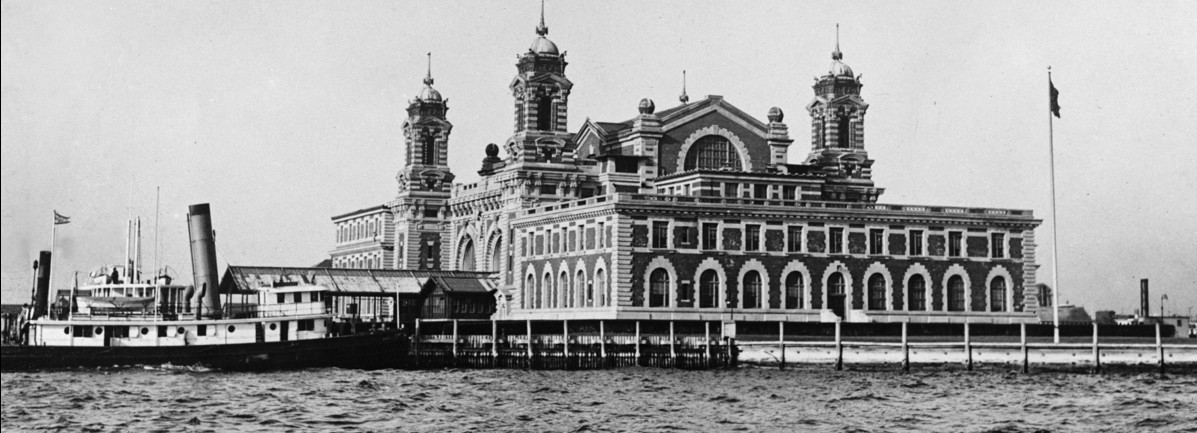
"When my family came from England during the war, people said, "You are welcome here. What can we do to help?" I am a beneficiary of the American people’s generosity"..Madeleine Albrighth
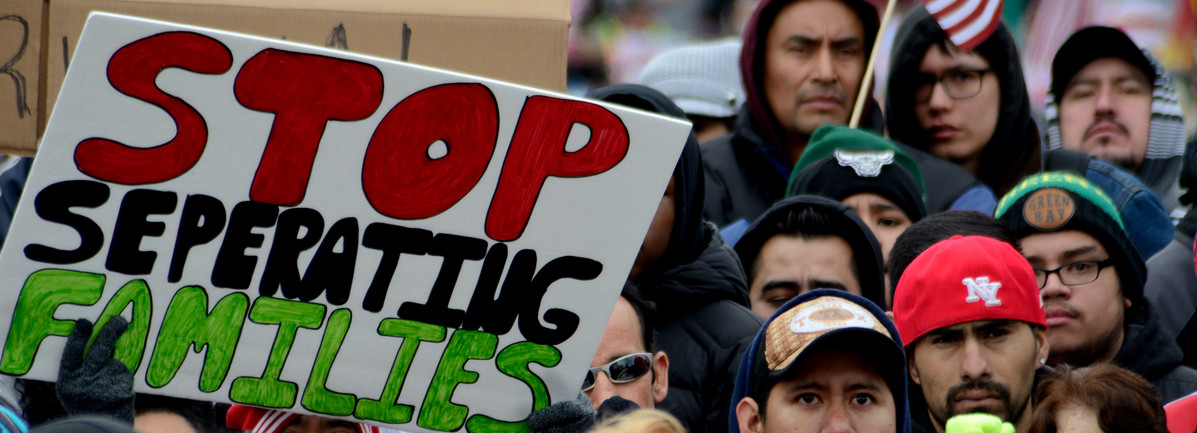
"Yes, they broke the law, but it’s not a felony. It’s an act of love, it’s an act of commitment to your family" -- Jeb Bush
Exchange Visitors
The J-1 classification (exchange visitors) is authorized for those who intend to participate in an approved program for the purpose of teaching, instructing or lecturing, studying, observing, conducting research, consulting, demonstrating special skills, receiving training, or to receive graduate medical education or training.
In carrying out the responsibilities of the Exchange Visitor Program, the Department of State designates public and private entities to act as exchange sponsors. J-1 non immigrants are therefore sponsored by an exchange program that is designated as such by the U.S. Department of State. These programs are designed to promote the interchange or persons, knowledge, and skills, in the fields of education, arts, and science.
Examples of exchange visitors include, but are not limited to:
- Professors or scholars
- Research assistants
- Students
- Trainees
- Teachers
- Specialists
- Nannies/Au pairs
- Camp counselors
Application Process
The U.S. Department of State plays the primary role in administering the J-1 exchange visitor program, so the first step in obtaining a J-1 visa is to submit a Form DS-2019, Certificate of Eligibility for Exchange Visitor Status, (formerly known as an IAP-66). This form will be provided by your sponsoring agency. You should work closely with the officials at your sponsoring agency who will be assisting you through this process. An official who is authorized to issue Form DS-2019 is known as a Responsible Officer (RO) or Alternate Responsible Officer (ARO). Your RO or ARO will explain to you what documents are needed in order to be issued a DS-2019.
After you have obtained a Form DS-2019, you may then apply for a J-1 visa through the U.S. Department of State at a U.S. embassy or consulate. The waiting time for an interview appointment for applicants can vary, so submitting your visa application as early as possible is strongly encouraged (though you may not enter the United States in J-1 status more than 30 days before your program begins).
Employment
Some J-1 non immigrants enter the United States specifically to work (as a researcher, nanny, etc.) while others do not. Employment is authorized for J-1 non immigrants only under the terms of the exchange program. Please check with your sponsoring agency for more information on any restrictions that may apply to you working in the United States.
Family of J-1 Visa Holders
Your spouse and unmarried children under 21 years of age, regardless of nationality, are entitled to J-2 classification. Your spouse and children are entitled to work authorization; however, their income may not be used to support you. To apply for work authorization as a J-2 non immigrant, your spouse or child would file Form I-765, Application for Employment Authorization.
Conrad 30 Waiver Program
The Conrad 30 Waiver program allows J-1 medical doctors to apply for a waiver for the 2-year residence requirement upon completion of the J-1 exchange visitor program. See section 214(l) of the Immigration Nationality Act (INA). The program addresses the shortage of qualified doctors in medically under served areas.
Eligibility
Although each state has developed its own application rules and guidelines, the following program requirements apply to all J-1 medical doctors.
The J-1 medical doctor must:
- Agree to be employed full-time in H-1B non immigrant status at a health care facility located in an area designated by U.S. Department of Health and Human Services (HHS) as a Health Professional Shortage Area (HPSA), Medically Under served Area (MUA), or Medically Under served Population (MUP).
- Obtain a contract from the health care facility located in an area designated by HHS as a HPSA, MUA, or MUP
- Obtain a "no objection" letter from his or her home country if the home government funded his or her exchange program
- Agree to begin employment at the health care facility within 90 days of receipt of the waiver, not the date his or her J-1 visa expires
See your state’s public health department website for specific details.
Application Process
To apply for a waiver, a J-1 medical doctor must:
- Obtain the sponsorship of a state health department
- Complete the U.S. Department of State (DOS) Form DS-3035, J-1 Visa Waiver Review Application
The state public health department that agreed to sponsor the J-1 medical doctor for a waiver must then send the waiver application to the DOS Waiver Review Division (DOS-WRD) for a recommendation.
After DOS Makes a Recommendation
DOS-WRD will notify USCIS electronically of its recommendation. DOS will notify the J-1 medical doctor, attorney of record (if applicable), and the state agency that requested the waiver by mail.
USCIS will make a final determination on whether to approve the waiver application. Upon a favorable recommendation by DOS-WRD, USCIS will generally grant the waiver as long as there are no underlying concerns. USCIS will provide written notice of its decision to the J-1 medical doctor and his or her representative (if applicable).
Responsibilities After Being Granted a Waiver
If USCIS grants the waiver:
- The petitioner must submit a Form I-129, Petition for a Non immigrant Worker, along with the DOS-WRD favorable recommendation letter, in order to request a change of the J-1 medical doctor’s non immigrant status to H-1B.
- The spouse and/or child of the waiver recipient must submit Form I-539, Application to Extend/Change Non immigrant Status, in order to change status from J-2 to H-4 non immigrant status.
- The J-1 medical doctor must practice medicine for at least three years in an area designated by HHS as a HPSA, MUA, or MUP.
Once the Conrad 30 waiver recipient has fulfilled all of the terms and conditions imposed on the waiver, including the 3-year period of employment with the health care facility, he or she (and his or her spouse and/or child) will become eligible to apply for:
- An immigrant visa
- Permanent residence
- H or L non immigrant visa
If waiver recipient fails to fulfill the terms and conditions imposed on the waiver, he or she (and his or her spouse and/or child) will once again become subject to the 2-year foreign residence requirement under section 212(e) of the INA.
Frequently Asked Questions
Q1. Does a J-1 medical doctor need to file Form I-612, Application for Waiver of the Foreign Residence Requirement, in order to apply for a Conrad 30 Waiver?
A1. No, the Form I-612 is not required.
Q.2 The law requires the recipient of a Conrad 30 waiver to work full-time for three continuous years. What is the definition of "full-time" work?
A2. DOS considers "full-time" employment to be 40 hours per week.
Q3. If a J-1 medical doctor is granted a Conrad 30 waiver and H-1B status, may he or she change employers if the original health care facility closes?
A3. Depending on the circumstances, USCIS may consider the closure of the health care facility named in the waiver application an extenuating circumstance excusing early termination of employment. A J-1 medical doctor who is granted a Conrad 30 waiver and H-1B status must comply with the terms and conditions of that non immigrant status. Such compliance includes the petitioner notifying USCIS of any material changes in the terms and conditions of the H-1B employment by either filing an amended or new H-1B petition, as required, under 8 CFR 214.2(h)(2)(i)(D), 214.2(h)(2)(E), and 214.2(h)(11). USCIS may excuse early termination of the 3-year period of employment with the health care facility named in the Conrad 30 waiver application and H-1B petition due to extenuating circumstances. Examples of extenuating circumstances include closure of the health care facility or hardship to the alien. In determining whether to excuse such early termination of employment, USCIS will base its decision on the specific facts of each case. In all cases, the burden to establish eligibility for a favorable exercise of discretion rests with the H-1B medical doctor.
Another health care facility may seek to employ such a waiver recipient (before the time the recipient has completed his or her 3-year contract named in the waiver application and the original H-1B petition) by filing a new H-1B petition with USCIS. See 8 CFR 214.2(h)(2)(i)(D) and (E). Although the state public health department does not need to file a new waiver application with DOS, the new H-1B petition must be accompanied by the documentary evidence generally required under 8 CFR 214.2(h), including:
- An explanation from the waiver recipient, with supporting evidence, establishing that extenuating circumstances necessitate a change of employment
- Evidence that the geographic area or areas of intended employment have been designated by HHS as a HPSA, MUA, or MUP
The new H-1B petition will not be approved unless USCIS determines that the waiver recipient has established the existence of extenuating circumstances that excuse early termination of employment as stated in the terms and conditions in the original H-1B petition.
Q4. Can the recipient of a Conrad waiver who is in H-1B status begin employment at a new health care facility after the extenuating circumstances H-1B petition is filed and while it is pending?
A4. Yes. The waiver recipient may begin employment with the new employer after the new H-1B petition is filed and while it is pending. However, if the new petition is denied, employment authorization shall cease and the waiver recipient will become subject to the 2-year foreign residence requirement under section 212(e) of the INA.
Q5. What are the reporting requirements for the health care facility named in the waiver application and H-1B petition if the waiver recipient fails to fulfill the 3-year employment contract, or if he or she changes employers?
A5. If the health care facility no longer employs the waiver recipient, the health care facility must immediately send a letter explaining the changes in the terms and conditions of employment of the waiver recipient to the Service Center that approved the I-129 petition, as is required, under 8 CFR 214.2(h)(11)(i)(A).
Q6. Can the spouse and/or child of a waiver recipient who has not yet fulfilled the terms and conditions of the Conrad 30 waiver independently apply for waiver of the 2-year foreign residence requirement?
A6. According to the DOS website, the spouse and/or child of a waiver recipient can independently apply for a waiver only if the principal waiver recipient has died, the spouse has divorced the principal waiver recipient, or if the child is over age 21.
Q7. How does a Conrad 30 waiver recipient (or some other concerned individual) report wage and labor related abuse?
A7. The Department of Labor’s Wage and Hour Division (WHD) is responsible for enforcing worker protections in certain temporary worker programs including the H-1B program.
Background on J-1 medical status
A J-1 exchange visitor who came to the United States or acquired such status in order to receive graduate medical education or training (a J-1 medical doctor) is generally ineligible to apply for:
- An immigrant visa
- Permanent residence
- H or L non immigrant status
To be eligible to do so, a J-1 exchange visitor must have resided and been physically present in his or her country of nationality or last residence for at least 2 years (the 2-year foreign residence requirement) upon completion of the J-1 exchange visitor program. Any spouse or child admitted as an accompanying J-2 status holder is also subject to the 2-year foreign residence requirement. See section 212(e) of the INA.
A J-1 medical doctor (and his or her J-2 spouse and/or child) is ineligible to change from J non immigrant status to any other non immigrant status (except in certain cases to A, G, T, or U). See section 248(a)(2) of the INA
I-612, Application for Waiver of the Foreign Residence Requirement (under Section 212(e) of the Immigration and Nationality Act, as Amended)
Purpose of Form
For certain exchange visitors (J-1 and J-2 visas) and their families to apply for a waiver of the requirement that they reside outside the United States for at least two years prior to returning or leaving the United States.
Number of Pages
Form 8; Instructions 7.
Edition Date
06/22/15. We cannot accept previous editions. (The edition date can be found at the bottom of every page on the Form and Instructions.)
Where to File
If you are filing Form I-612 for either of the following two reasons:
1. Exceptional hardship to the exchange visitor’s U.S. citizen or lawful permanent resident spouse or child; or
2. The exchange visitor’s belief that returning to the country of his or her nationality or last residence would subject him or her to persecution on account of race, religion, or political opinion.
File your form I-612 with the California Service Center:
Via US Postal Service to:
USCIS California Service Center
I-612 Unit P.O. Box 30112
Laguna Niguel, CA 92607-0112
Via courier service to:
USCIS California Service Center
24000 Avila Road
2nd floor, room 2312
Laguna Niguel, CA 92677
If you are filing Form I-612 for one of the following reasons:
1. A request by an interested U.S. Government agency (IGA); or
2. A written statement from your country of nationality or last foreign residence that it has no objection to the waiver (no objection); or
3. A request from a state’s department of public health, or its equivalent, to the Department of State (DOS) to work in a medically under served area. (Conrad Waiver Program)
Filing Fee
$585